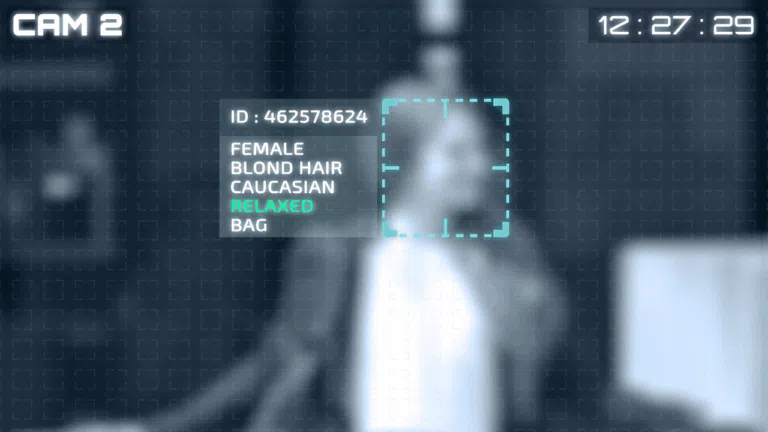

Facial recognition has quickly moved into everyday policing as AI and related technologies continue to advance. The NYPD, like many law enforcement agencies across the country, now uses this powerful tool to help identify suspects in serious crimes ranging from violent assaults to theft. Supporters point to its potential for speeding up investigations and keeping communities safe.
But as the technology spreads, so do concerns. How accurate is facial recognition when used in real-world conditions? Who oversees its use, and what safeguards protect against mistakes? Most importantly, could an innocent New Yorker find themselves wrongfully arrested because an algorithm got it wrong?
This article explores how the NYPD deploys facial recognition, the policies meant to guide its use, and the very real risks of error that raise questions about fairness, privacy, and justice as law enforcement expands its use of AI.
What Is NYPD Facial Recognition?
Facial recognition is a digital tool that compares images gathered during criminal investigations with lawfully possessed arrest photos. The NYPD has used this technology since 2011 to help identify suspects from footage connected to robberies, assaults, shootings, burglaries, and other crimes.
According to the NYPD, the technology has been instrumental in generating investigative leads that speed up casework and support public safety efforts.
For example, in 2019, the Facial Identification Section processed 9,850 photo comparison requests, generating 2,510 possible matches across a wide range of cases, murders, rape, felony assaults, robberies, and grand larcenies. Despite the scale of its use, the department reports no wrongful arrests tied directly to the technology.
What Happens After the System Flags a Possible Identification Match?
When the system identifies a possible match, trained investigators in the NYPD’s Facial Identification Section conduct a visual analysis to confirm the reliability of the suggested match and run a background check to assess consistency with the details of the investigation.
As the NYPD states, a facial recognition match alone does not provide probable cause for arrest or a search warrant. Instead, it serves as a lead, requiring detectives to find corroborating evidence before moving forward.
Accuracy, Bias, and Wrongful Arrests
Independent studies have shown that facial recognition can be less accurate for certain demographic groups, including African Americans, Asians, and women. These disparities have raised concerns about bias in AI-driven policing.
The NYPD says it does not rely on facial recognition alone to make arrests. In addition, the National Institute of Standards and Technology (NIST) reports significant improvements in accuracy over the past few years.
That said, while wrongful arrests are rare, they do happen. For example, this past August, a man was wrongfully arrested due to the NYPD’s facial recognition technology.
To decrease risk factors, NYPD policy requires multiple human reviewers to analyze results before a potential match is shared with investigators.
Limits on Facial Recognition Use
According to the NYPD, there are strict limitations on how facial recognition technology is deployed. Some of them include:
- Body-worn cameras: The NYPD does not routinely use facial recognition to analyze body camera footage. Only in rare cases, where a still image of a suspect is extracted during an active criminal investigation, may it be submitted for comparison.
- Citywide surveillance: The department does not scan live city-owned or private security camera networks; only video tied to an ongoing crime may be analyzed.
- Crowds and rallies: The NYPD does not use facial recognition for mass surveillance or to monitor crowds at protests.
- External databases: Routine comparisons against DMV driver’s license photos or social media images are prohibited. Exceptions may occur, but only with high-level authorization from the Chief of Detectives or Deputy Commissioner of Intelligence and Counterterrorism.
These restrictions aim to balance public safety with privacy protections.
Can You Be Wrongfully Arrested by AI in NYC?
According to the NYPD, a facial recognition match is not enough to justify an arrest. Rather, it serves only as an investigative lead that must be supported by other evidence.
While safeguards are robust, misidentifications and procedural errors can still happen, which is why the debate over transparency and accountability in AI-based policing continues. It is important for the public to stay informed about these evolving technological measures in law enforcement. If someone is suspected of a crime, they should seek help from a defense attorney immediately.
What You Can Do, and What to Watch For
Because facial recognition technology is here to stay, it is important to:
- Stay informed: Know how facial recognition is used in New York City and understand your rights regarding surveillance technologies.
- Be proactive if involved in a case: Work with an experienced attorney to ensure any facial recognition evidence is supported by corroborating proof and thorough human review.
- Support appropriate oversight: Advocate for policies that promote transparency and clear safeguards around AI in law enforcement.
FAQs
What is facial recognition technology, and how does the NYPD use it in investigations?
Facial recognition is a digital tool that the NYPD uses to compare images collected during criminal investigations with lawfully possessed arrest photos. The NYPD employs it as an investigative aid, not as definitive proof. It helps generate leads in cases involving robberies, burglaries, assaults, shootings, and other serious crimes.
How long has the NYPD been using facial recognition for?
The NYPD has used facial recognition technology since 2011.
Does the NYPD use facial recognition on footage from body-worn cameras?
No, the NYPD does not routinely analyze body-worn camera video with facial recognition. However, if an officer wearing a body camera witnesses a crime but is unable to apprehend the suspect, a still image may be extracted from the video and submitted for facial recognition analysis.
Can someone be arrested in New York City based solely on a facial recognition match?
No. A facial recognition match by itself does not establish probable cause for arrest or a search warrant, but is used only as an investigative lead. Further corroborating evidence and human review are required before any arrest is made.
Does facial recognition technology replace traditional police work?
No. The NYPD states that facial recognition is only one tool in an investigation. In other words, facial recognition technology is only used as an investigative lead. Detectives must still gather witness statements, physical evidence, and other corroborating evidence before moving forward against a suspected individual.